
Franklin Township City Directory Collections
Franklin Township research uses the historical shelf at Columbus Metropolitan Library's Local History & Genealogy department in Main Library. It is not a stand-alone Township publication. The Library holds annual Columbus city directories back to 1841, along with a self-serve collection of Franklin County directories. That combination matters because Township islands were shaped by annexations and are largely surrounded by Columbus. A Columbus title can be useful for a Township family, yet a missing entry may simply mean the address fell outside the city limits covered by that volume.
| Collection | Years | Where Held | Access |
|---|---|---|---|
| Columbus city directories | 1841 forward; annual | CML Main Library, Local History & Genealogy | Physical shelf; coverage follows applicable Columbus limits |
| CML digitized City Directory Collection | Titles dating to the 1840s | CML digital collections | Browse and search online; digitization remains in progress |
| Street-address sections | Beginning in 1911 | Main Library directory volumes | Address-first occupant research |
| Franklin County directory shelf | Individual years not listed by the collection guide | CML Main Library | Self-serve county material for boundary changes |
| Early Franklin County telephone directories | Early years; title-specific span | CML digitized collection | Subscriber and address lead, checked title by title |
The CML City Directory Collection is a sound remote starting point, but it does not stand in for every annual volume. A date absent online is a reason to consult the Main Library run, not a reason to fill the gap from an adjacent year.
The digitized city directory collection shows the online doorway to these historical volumes.
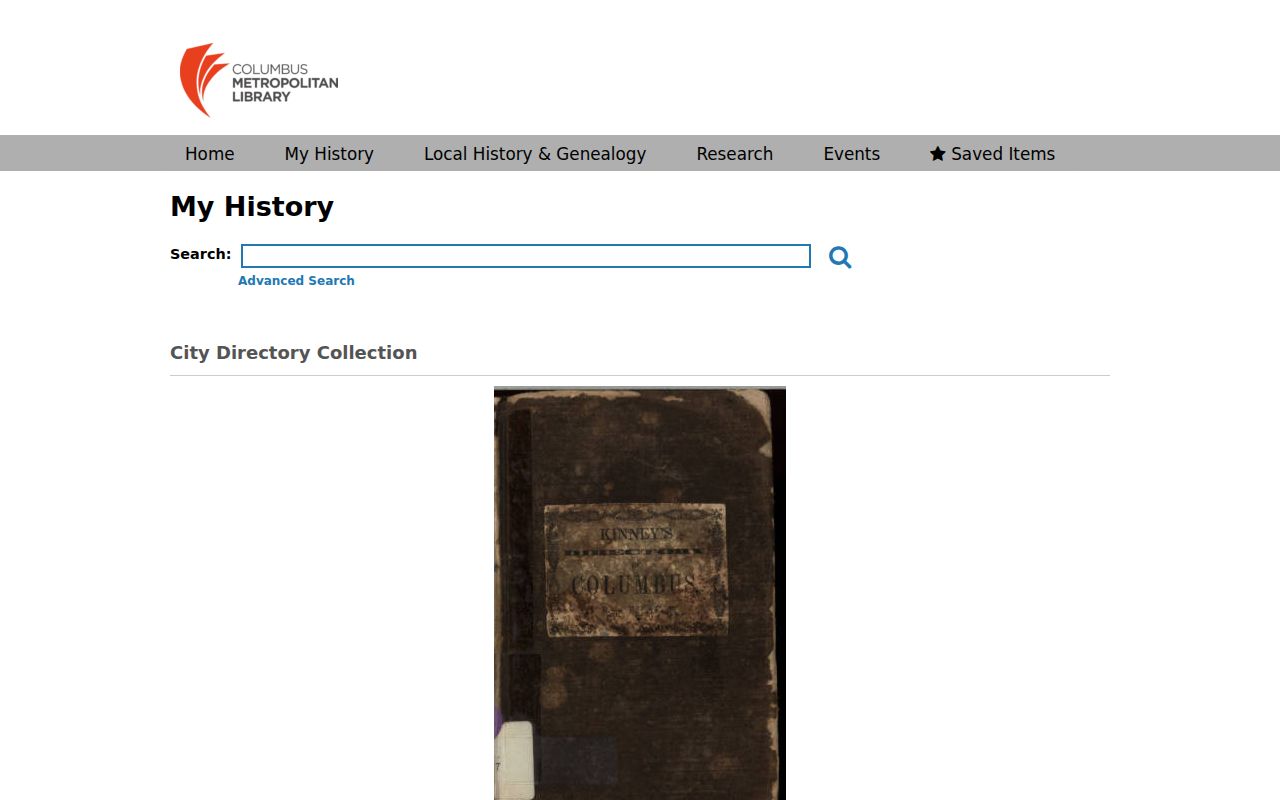
Use the collection search to identify a title and year, then check record metadata and page images before treating an entry as evidence.
Note: A directory identifies a dated listed occupant, not every person connected to a property.
Columbus Directory Years for Franklin Township
Named volumes give a Franklin Township city directory search more precision than a generic date range. The digitized set includes 1843-44, 1845-46 Kinney's, 1856-57 Williams, and 1858-59 Williams. Later material includes Lathrop's titles from the 1860s and 1870s. The R. L. Polk era includes a verified 1889-90 volume, then 1902, 1905-06, 1907-08, and 1910-11 titles. These dates describe items in the public digital collection, not a promise that every address in a present-day Township island appears in each one.
The digitized Columbus city-directory record is the source for this historical directory image.
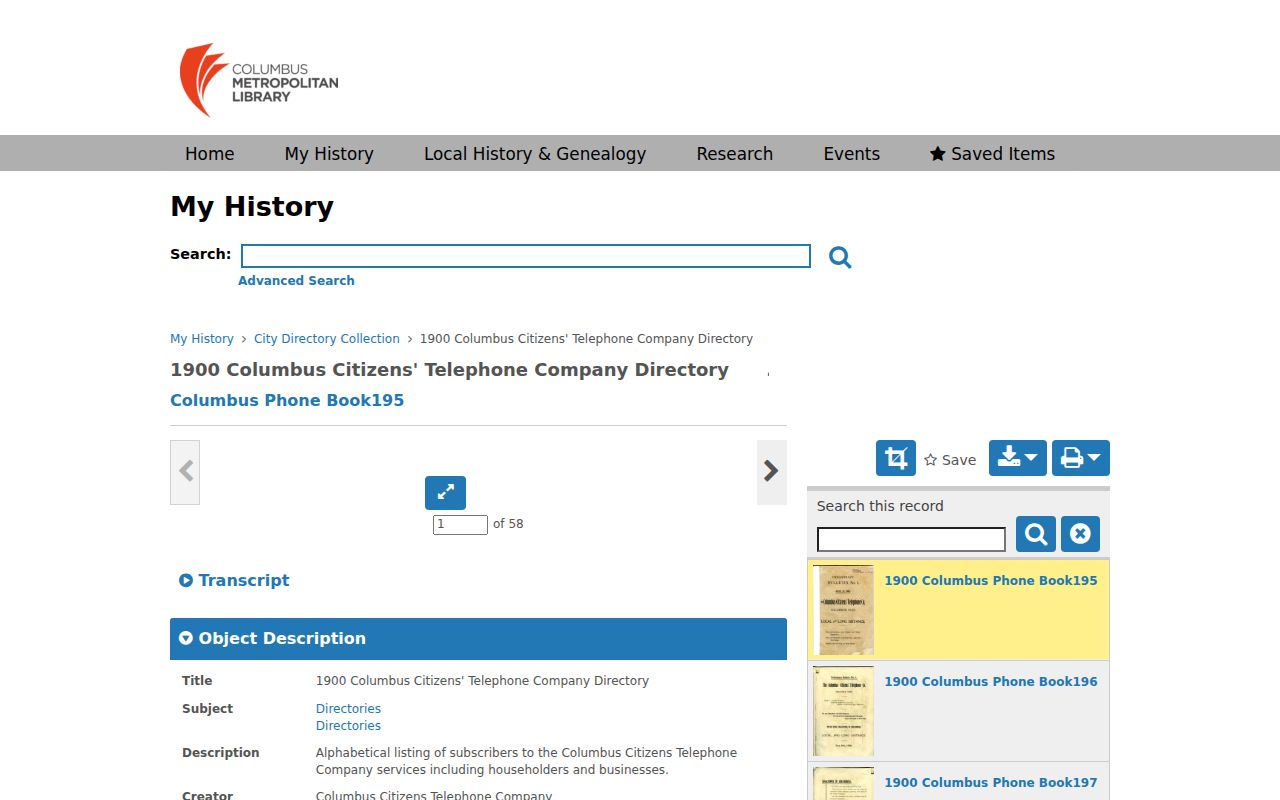
An annual volume can help establish a sequence, especially when initials, address changes, or a widow notation distinguish people with similar names.
Dreher's Simplex Guide for 1917-18 and Simplex Street & House Number Guide for 1929-30 are unusually direct address-first titles. CML's catalog also lists a 1996 Polk Cross-reference Directory for Franklin County as in-library material. A catalog result is an access lead, not proof of an address or a complete run.
Reading a Franklin Township City Directory
A city directory entry must be read as a printed record from a particular volume. In the 1889-1890 digitized Columbus directory, the useful inventory includes surname, given name or initials, a work or occupation abbreviation, possible employer information, residence address, business address when separately printed, and the directory section. Widow notation may appear. The research scan did not establish one universal key or a universal owner mark, so read the key and page for the selected year before assigning a meaning to an abbreviation.
| Name form | Surname plus a given name or initial, useful when paired with an address and year. |
|---|---|
| Residence line | A printed home address or notation, which identifies a listed occupant for that edition. |
| Work detail | An occupation abbreviation or, in some entries, an employer or business clue. |
| Family notation | A spouse or widow reference when printed, which can guide obituary or census research. |
| Section | Alphabetical, street-address, business, or telephone material. The section changes what can be inferred. |
- Criss-cross directory
- An address-order section that helps move from a street number to the listed occupant.
- Householder index
- A name-based listing used to find a person before testing an address in another section.
- Abbreviation key
- The volume's own explanation of shortened terms. Check it first because conventions vary by publisher and year.
The 1901 Columbus Sanborn viewer is the source for this period-map image.
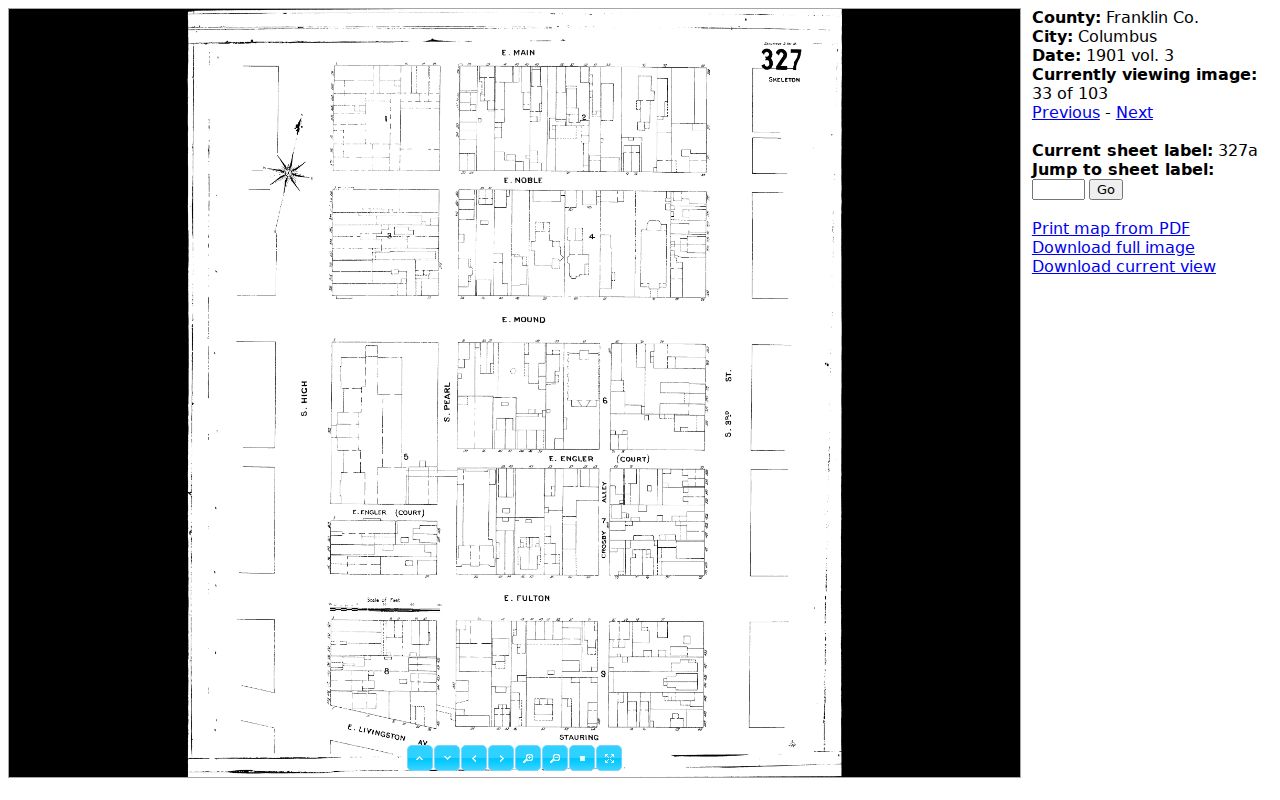
Directory addresses become more reliable when checked against period maps, particularly where street form or municipal coverage changed over time.
1911 Franklin Township Address Sections
Beginning in 1911, Columbus directories included a houses-by-street-address section. This is the local reverse, or criss-cross, equivalent for a historic house search. Start at the address for a chosen year, record the listed occupant exactly as printed, and then find that name in the alphabetical portion of the same volume. Nearby annual volumes help show whether the listing changed, disappeared, or stayed put. The Library cautions that this street section names an occupant, not necessarily the owner.
The CML house-history guide sets out the local sequence from the Auditor's parcel information to directories, deeds, maps, and related records.
The guide's address-first method keeps a directory listing in its proper place: evidence of an occupant in a dated source, rather than a substitute for a title record.
Franklin Township City Directory Help
Main Library's Local History & Genealogy department welcomes walk-in browsing without an appointment. It also offers one-hour in-person consultations and online Ask a Librarian assistance. Its wider collection includes microfilm and print material for land, probate, wills, cemeteries, naturalization, military service, county history, atlases, maps, and more than 7,000 published family histories. Those supporting records are useful when a directory gives only an initial or a street number.
The Library's research tools include Ancestry Library Edition for in-library use. That access condition matters. It can be useful for census and directory work at Main Library, but it should not be described as remote access. For local newspaper and obituary questions, the Library also provides a limited request service.
The CML catalog search for Columbus city directories helps locate titles that are not part of the current online scan set.
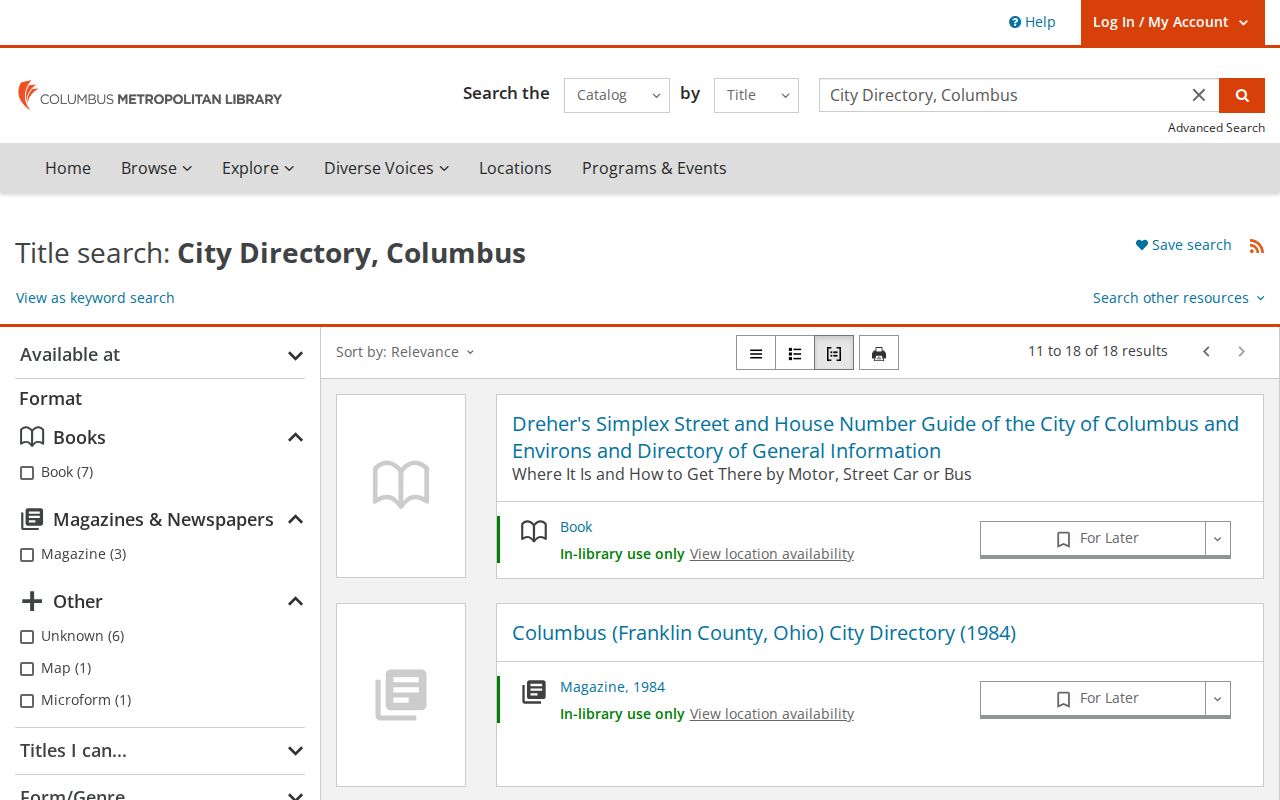
Catalog results are a practical way to plan an in-person search when a desired directory year is not digitized.
When a City Directory Misses Franklin Township
A blank city-directory search does not establish that no one lived at an address. Franklin Township is made of islands separated by annexations, and CML's directory guidance is tied to Columbus corporate limits. An address can be present in a later Columbus volume, absent earlier, or covered better by the county shelf. Use historic maps, the parcel's legal description, and recorded deeds to test whether the same place was in the directory's intended geography during the year in question.
Sanborn maps add structure and street context, not a resident list. CML identifies Columbus map years of 1887, 1891, 1901, 1921, and 1921-51, while its historic property atlases include 1872, 1899, 1910, 1920, and 1937 titles. Confirm that the Township address and map sheet are covered before drawing conclusions.
The Franklin County Genealogical & Historical Society is the source for this local-history image.
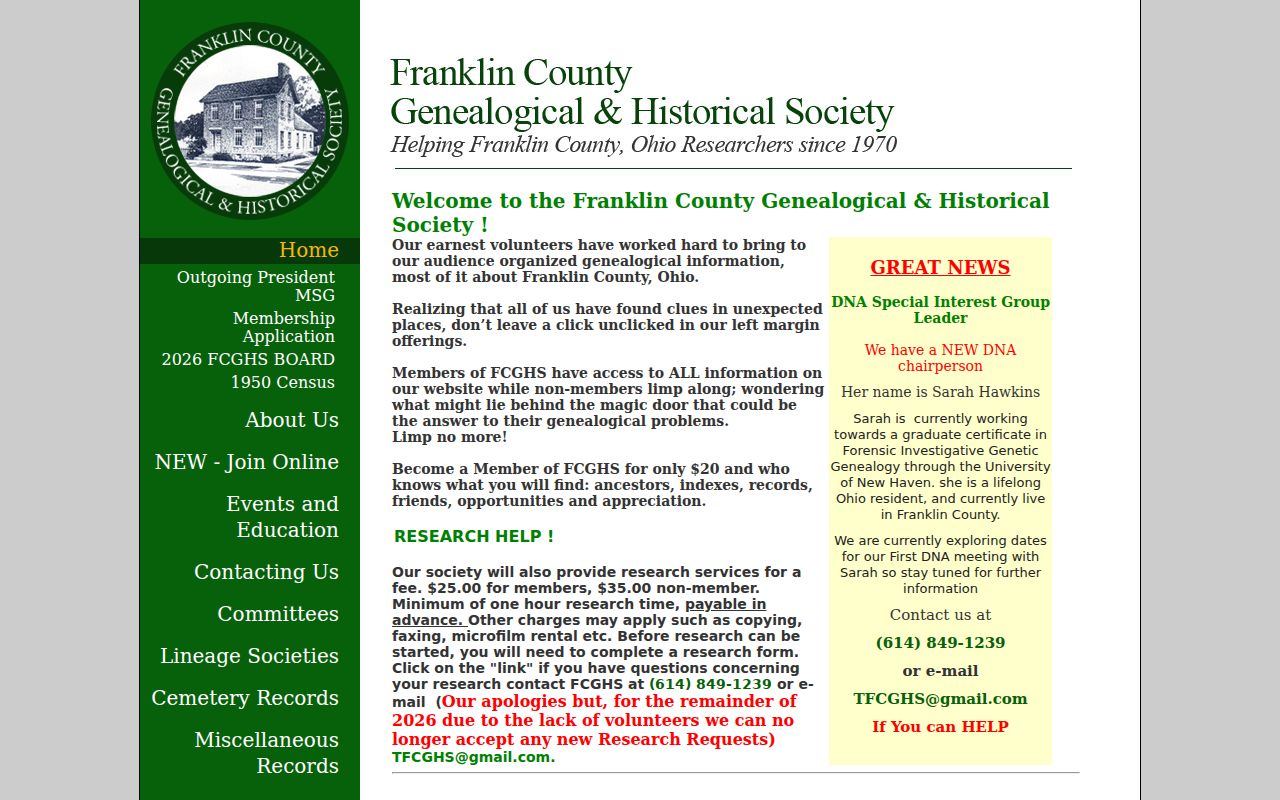
The Franklin County Genealogical & Historical Society is another historical source, although its research page reported that it was not accepting new requests for the rest of 2026 because of a workforce gap.
Note: Maps, directories, and deeds answer different questions and should be dated before they are compared.
Franklin Township Directory Gaps and Obituaries
A disappearance from a city directory can mean a move, a name change, a death, a changed boundary, or simply an unlisted year. CML's obituary service accepts up to six free requests each month and states a normal response within 48 hours, excluding Sundays, holidays, and closures. Its published contacts include history@columbuslibrary.org and 614-645-2275. An obituary is a family-history lead that may point to a probate file or deed transfer; it does not establish where a living person is located.
CML's newspaper access gives another dated check. The Library lists Dispatch electronic editions from July 1985 forward, a Columbus News Index for local-interest material from 1960-97 and obituaries from 1934-97, and historical papers on microfilm. Recent digital-archive expansion improves access, but no search result should be treated as a complete OCR record.
The CML obituary request service is the documented alternative when a directory entry ends but a family-history trail needs a dated next step.
Trace Franklin Township City Directory Households
For a household trail, use one year at a time and keep source types separate. A city directory can narrow a name and address. A census can test household composition. Recorder and Auditor records can then examine ownership. This sequence avoids treating the tax owner, a listed occupant, and an heir as the same person without a date.
- Find the first likely name or street-address appearance in a dated Columbus or Franklin County directory.
- Check the alphabetical and street sections of that volume, copying initials, addresses, and printed abbreviations exactly.
- Review nearby annual volumes for a move, an absence, a changed name form, or a widow notation.
- Pair the run with available federal census schedules, including 1900 through 1950, to test the household.
- Use Recorder grantor/grantee material, probate records, and an obituary only for the ownership or family transition each source can support.
The current digitized City Directory Collection is useful for the first step, while the physical shelf resolves many missing annual volumes. For a single house's ownership chain, the address-focused process belongs with past residents research rather than the directory shelf alone.